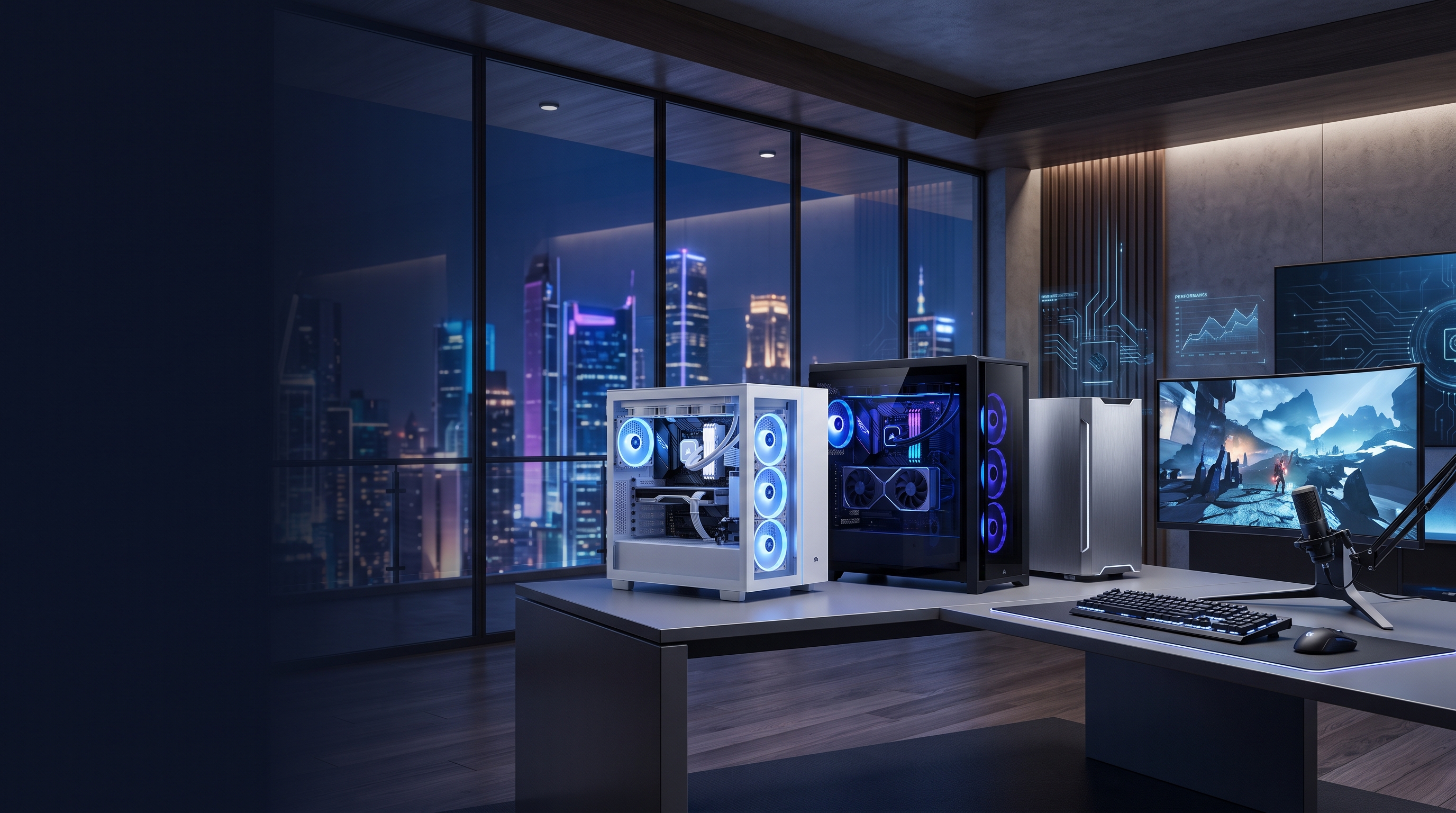
The hardest part of buying a gaming PC usually isn't finding one — it's figuring out where your money actually goes furthest. This guide breaks the decision into three simple questions: what will you play, what's your real budget, and should you buy prebuilt or go custom.
Start with what you actually play
Competitive shooters like Valorant or CS2 run well on modest hardware and reward a high refresh-rate monitor more than a flagship GPU. Demanding open-world or ray-traced titles lean much harder on the graphics card. Be honest about what's actually in your game library before spending extra on horsepower you won't use.
The graphics card is almost always the right place to spend more
For gaming specifically, the GPU has the single biggest impact on frame rates and visual quality. A common mistake is buying a top-tier processor and pairing it with a mid-range graphics card — for pure gaming performance, that budget is usually better spent the other way around, with a strong GPU and a competent (not flagship) CPU.
A simple budget split that works for most builds
- 35-40% of the budget on the graphics card
- 15-20% on the processor
- 10-15% on RAM and storage combined (16GB RAM and an NVMe SSD is a sensible baseline)
- The remainder on the case, power supply, motherboard and cooling
Prebuilt vs custom build
A prebuilt gaming PC is the simpler choice: it arrives tested, balanced and covered under a single warranty, and you avoid the risk of a mismatched or incompatible part list. A custom build can offer more control over exact component choice, but only makes sense if you specifically know what you want to change and are comfortable with the assembly and troubleshooting that comes with it. For most buyers, especially first-time PC gamers, a professionally assembled prebuilt is the more reliable option.
Don't forget the monitor and power supply
A powerful GPU paired with a 60Hz monitor leaves real performance on the table — if competitive gaming matters to you, a 144Hz+ display is often a better upgrade than the next GPU tier up. Equally, don't treat the power supply as an afterthought: an underrated or low-quality PSU is one of the few components that can damage the rest of your system if it fails.
We build custom gaming PCs around the latest Intel Core, AMD Ryzen and NVIDIA GeForce hardware, and also stock individual graphics cards if you're upgrading an existing rig. Every system we build ships with genuine components and official warranty — browse our gaming PCs and graphics cards to see current builds and pricing.